

Cleaning restores it. Sealing keeps it that way.
Freshly cleaned pavers and roofs start collecting Florida again the same afternoon. Sealing locks in the result — richer color, stabilized joint sand, and a surface that sheds organic growth instead of feeding it.
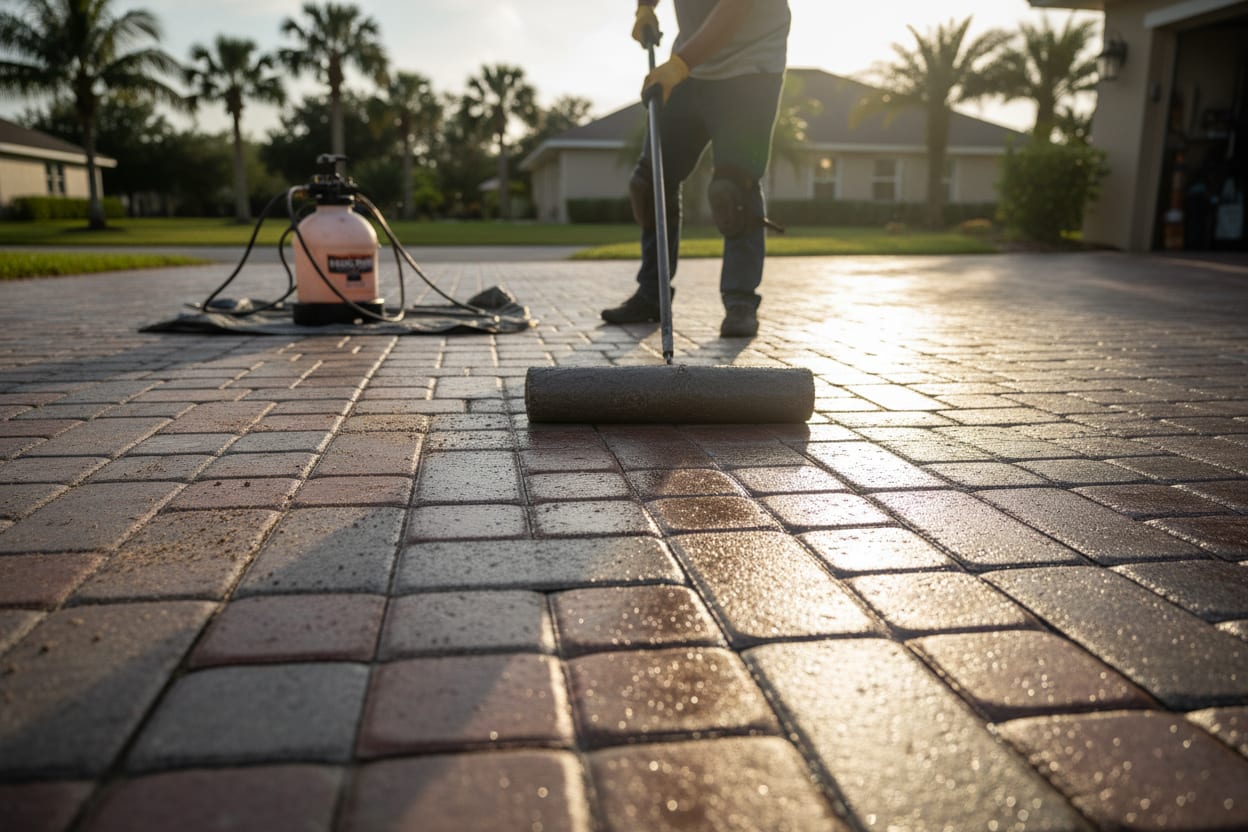
Sealing is a system, not a coat of gloss. Pavers are cleaned and allowed to dry, joint sand is re-set where needed, and sealer is applied to the manufacturer's coverage specification — which is what determines whether it cures evenly or hazes. Finish level (natural, enhanced or wet-look) is chosen with you before application.
Roof sealing follows the same discipline where the roofing material and its manufacturer support it: clean first, dry, then apply the specified product. Where a roof system's warranty terms don't support a sealer, we say so plainly at the assessment rather than apply something the manufacturer wouldn't.
The order matters commercially, too: cleaning and sealing in one mobilization costs less than two separate visits, and the sealed surface extends the interval before the next cleaning cycle — which is exactly the math a recurring-care plan is built on.
- Clean-then-seal — sealing only over a cleaned, dried, prepared surface.
- Manufacturer-specified — products applied to the maker's coverage and cure spec.
- Joint sand stabilization — paver joints re-set and locked as part of the work.
- Finish chosen with you — natural, enhanced or wet-look agreed before application.
Every job closes with
Before-and-after evidence by asset, a written service report, and the next service date on your maintenance calendar. The documentation is the deliverable.
Straight answers.
How long does sealing last?
It depends on the product, the surface and its exposure — sun, irrigation, traffic. Rather than promise a number, we note the manufacturer's stated service range for the product used in your written report, and the recurring calendar tracks when a renewal is actually due.
Can you seal a driveway you didn't clean?
Sealing over an unprepared surface locks the grime in, so no — cleaning is part of the sealing scope. If the surface was recently and properly cleaned, the assessment confirms it's ready before we apply anything.
Will sealing make my pavers slippery?
Finish selection controls this. High-gloss films on smooth surfaces can reduce traction when wet, which is why pool decks and walkways are usually specified with a natural or matte finish, or an additive where the manufacturer provides one. It's part of the finish conversation before application.
Let's look at your property.
Send us an address. We'll review it, tell you honestly what it needs, and put a written scope in front of you. No obligation, and no pressure to book anything on the call.